

Combinators in CSS ka matlab hota hai do ya usse zyada selectors ke beech ka relationship define karna.
Ek CSS selector me multiple selectors ho sakte hain, aur unke beech combinator use karke hum more specific selection kar sakte hain.
CSS me total four types ke combinators in CSS hote hain:
- Descendant combinator (space)
- Child combinator (>)
- Next sibling combinator (+)
- Subsequent-sibling combinator (~)
Descendant Combinator (space)
CSS Combinators me descendant combinator ka use sabhi elements ko select karne ke liye hota hai jo kisi element ke andar ho (children, grandchildren, etc.).
Example:
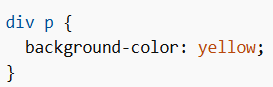
Yeh example sabhi <p> elements ko select karega jo <div> ke andar hain.
Child Combinator (>)
CSS Combinators me child combinator sirf direct children ko select karta hai.
Example:
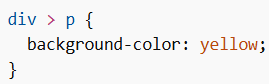
Yeh sirf un <p> elements ko select karega jo <div> ke direct child hain.
Next Sibling Combinator (+)
Combinators in CSS me next sibling combinator ek element ko select karta hai jo kisi element ke immediately baad aata hai.
Note:
- Dono elements ka same parent hona chahiye
Example:
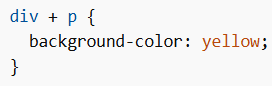
Yeh first <p> element ko select karega jo <div> ke turant baad aata hai.
Subsequent-sibling Combinator (~)
Combinators in CSS me subsequent-sibling combinator sabhi sibling elements ko select karta hai jo kisi element ke baad aate hain.
Example:
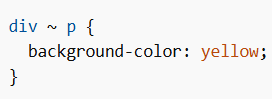
Yeh sabhi <p> elements ko select karega jo <div> ke baad aate hain aur same parent share karte hain.
Combinators in CSS selectors ke beech relationship define karne me help karte hain, jisse hum specific elements ko accurately target kar sakte hain aur better styling control achieve kar sakte hain.